
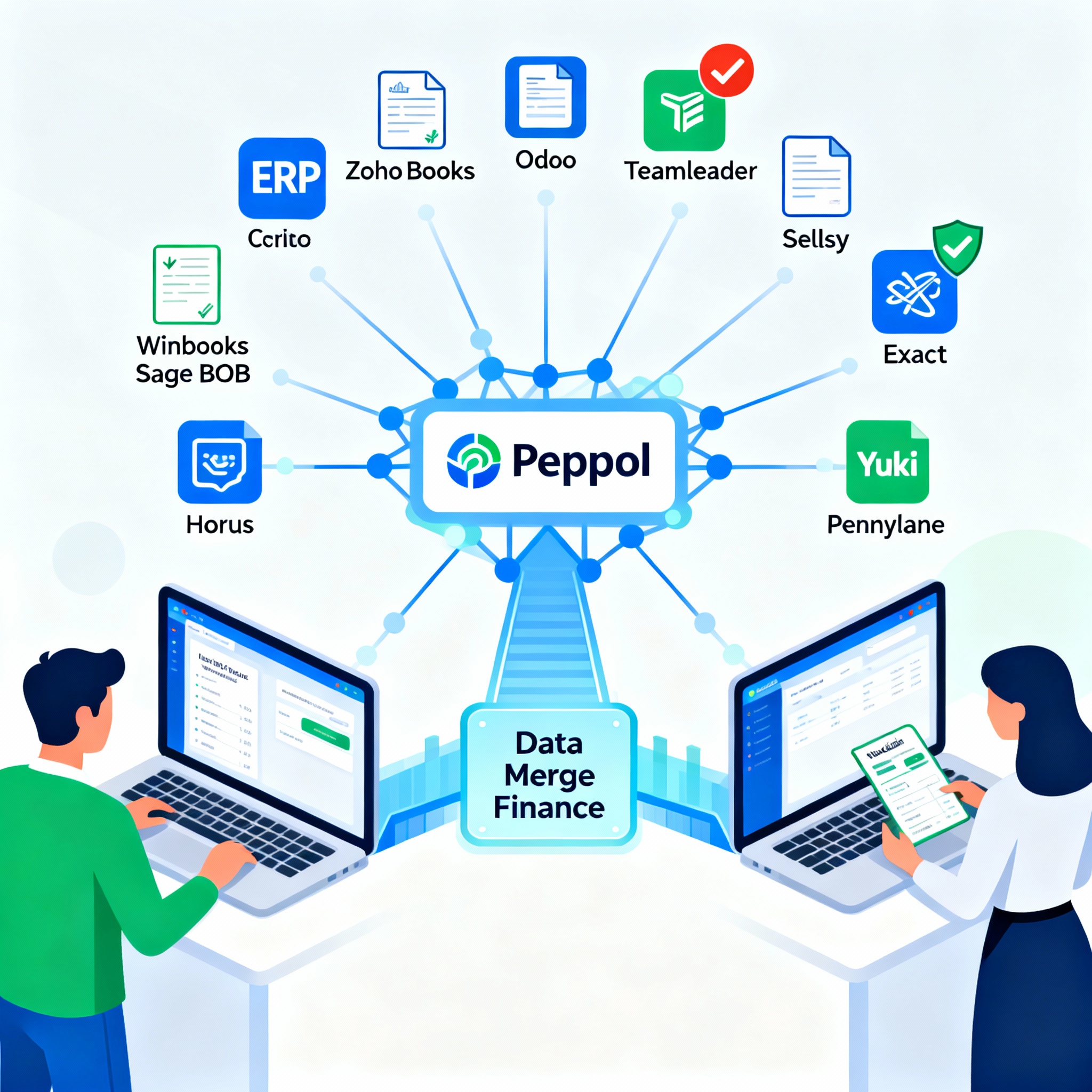
Since 1 January 2026, the structured electronic invoice has become a major operational issue for Belgian trustees.
The trustee must absorb more than invoices
The subject is not just receiving more electronic documents. It is also necessary to integrate these flows into accounting, maintain control over controls and avoid recreating manual tasks at each stage.
1. Let the client work in his tool
Customers want to keep their LES or management software. With Data Merge Finance, the trustee can preserve this use without breaking the accounting flow.
2. Automatically synchronize financial flows
- Sales invoices transmitted without rescission
- Purchase invoices integrated into the accounting flow
- Cleaner data for both the firm and the customer
3. Maintain control through draft mode
Automation does not remove accounting control. The entries may be sent in draft for validation of imputations, VAT rules and any adjustments.
4. Reduce double entry and errors
Less collection means less errors in amount, date or reference, and better consistency between the client's tool and accounting.
5. Transforming the obligation into a competitive advantage
- Better support clients
- Gaining efficiency internally
- Sustainable improvement of quality of service
In Belgium, firms already have an interest in industrializing flows that are actually rotating. In France, this logic gives a lead time to structure future flows before they get in charge.
Conclusion
Data Merge Finance helps trustees reconcile customer autonomy, compliance, performance and accounting quality. This is a very concrete response to absorb already active Belgian flows and to prepare future extensions more calmly.
Field evidence
These items are based on accounting synchronization cases observed on Zoho Books environments, management software and accounting software Belgian or French. The examples below describe the operational logic used to frame a reliable flow.
Workflow type checked
- 1. Identify the source software: Zoho Books, Odoo, Teamleader or other billing tool.
- 2. Validate accounting objects: invoices, credit notes, third parties, VAT, newspapers and payments.
- 3. Define mapping rules: accounts, VAT codes, newspapers, reference formats and exceptions.
- 4. Test the stream on a real folder before progressive activation.
- 5. Supervise discards and correct the rules rather than reprocess exports by hand.

