Double encoding between billing tool and accounting software seems to be commonplace, but it costs time, money and reliability.
Why double encoding persists
In many companies, sales, billing and accounting still live in different tools that do not communicate properly. The collection becomes the rule.
Four very concrete effects
1. An immediate waste of time
Each invoice requires several interventions.
2. More Risk of Errors
A bad date, a wrong amount or a wrong third party create discrepancies.
3. An incomplete financial vision
Until the data is reconciled, the steering remains unclear.
4. More stress at key moments
Closings, VAT returns and period ends become more tense.
The consequences for the company
- More Administration
- Accounting and tax delays
- Less responsiveness in piloting
- Higher human and financial costs
How to reduce double encoding sustainably
- Connect software via API
- Set up automatic synchronization
- Limit repetitive manual imports
- Define a clear flow with the accountant
Conclusion
Double encoding is not a fatality. With a well structured flow between billing and accounting, the company saves time, reduces errors and improves its visibility.
Field evidence
These items are based on accounting synchronization cases observed on Zoho Books environments, management software and accounting software Belgian or French. The examples below describe the operational logic used to frame a reliable flow.
Workflow type checked
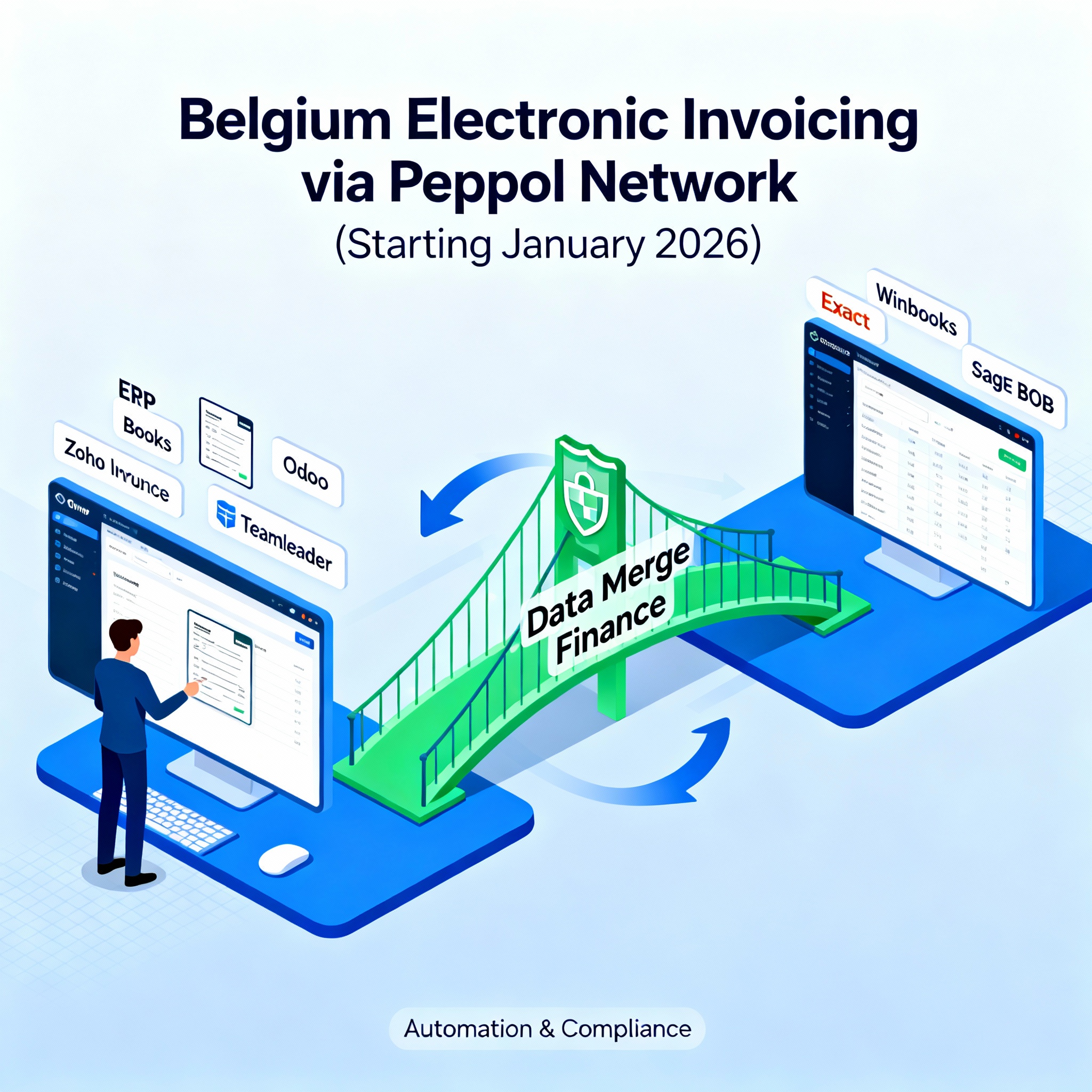
- 1. Identify the source software: Zoho Books, Odoo, Teamleader or other billing tool.
- 2. Validate accounting objects: invoices, credit notes, third parties, VAT, newspapers and payments.
- 3. Define mapping rules: accounts, VAT codes, newspapers, reference formats and exceptions.
- 4. Test the stream on a real folder before progressive activation.
- 5. Supervise discards and correct the rules rather than reprocess exports by hand.

