
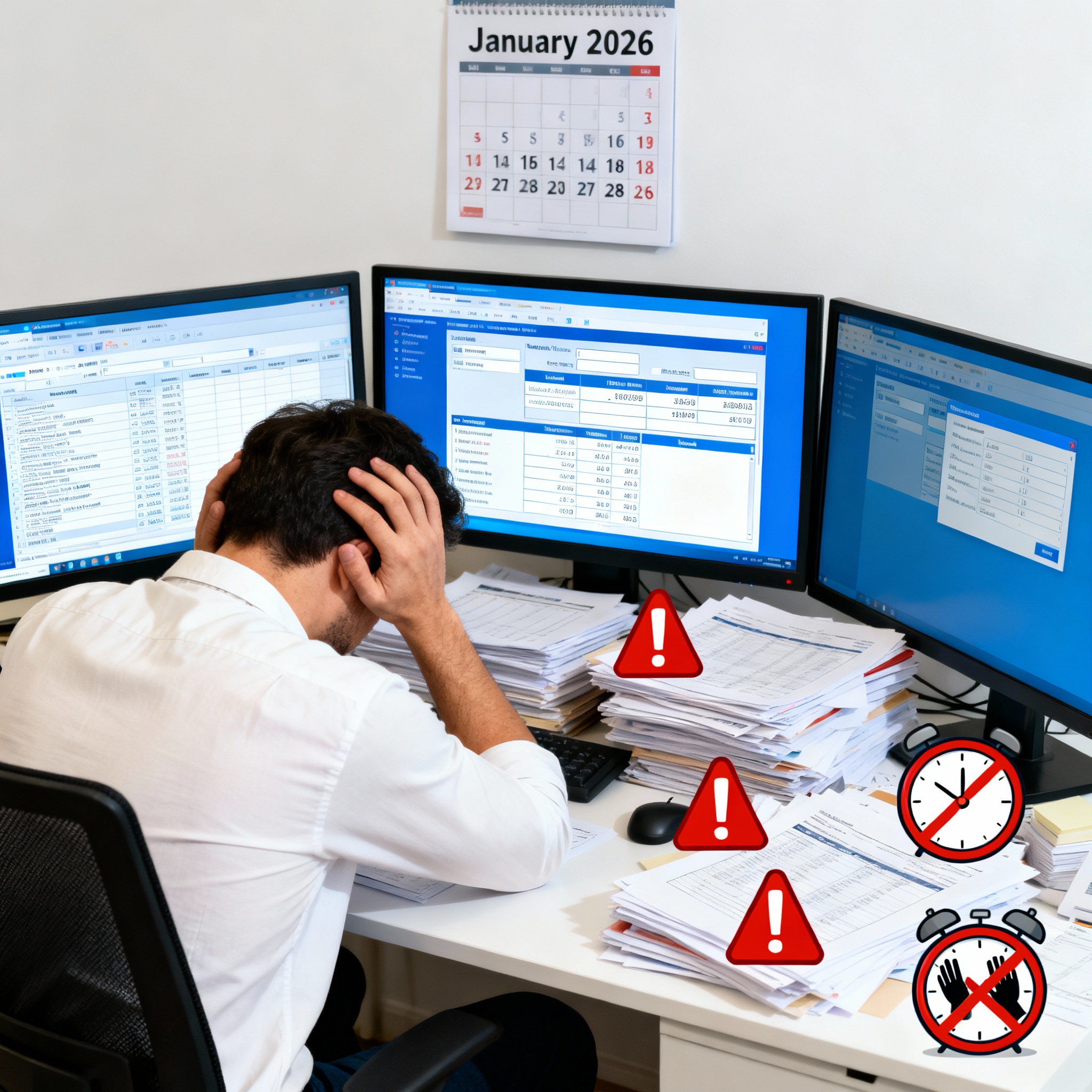
Double encoding seems to be annoyance, but it quickly weighs heavily in an SME or in an accounting department that deals with volume.
Lost time and labour costs
Retrieving each bill for five to ten minutes quickly represents tens of hours of administrative work per month. This time does not bring any additional value.
Errors and correction fees
A typing error on an amount, date, VAT code or a third party then triggers checks, corrections and sometimes penalties.
Indirect costs of double encoding
- Higher tax risk
- Lower productivity of teams
- Less visibility on cash and stocks
Concrete examples of impact
- An SME earns several hours a week by removing the reselection
- An accounting firm corrects less when newspapers, third parties and VAT already arrive structured
- Financial management decides faster with up-to-date data
Conclusion
Automation of synchronization between billing and accounting directly reduces the visible and invisible costs of double encoding.
Field evidence
These items are based on accounting synchronization cases observed on Zoho Books environments, management software and accounting software Belgian or French. The examples below describe the operational logic used to frame a reliable flow.
Workflow type checked
- 1. Identify the source software: Zoho Books, Odoo, Teamleader or other billing tool.
- 2. Validate accounting objects: invoices, credit notes, third parties, VAT, newspapers and payments.
- 3. Define mapping rules: accounts, VAT codes, newspapers, reference formats and exceptions.
- 4. Test the stream on a real folder before progressive activation.
- 5. Supervise discards and correct the rules rather than reprocess exports by hand.

